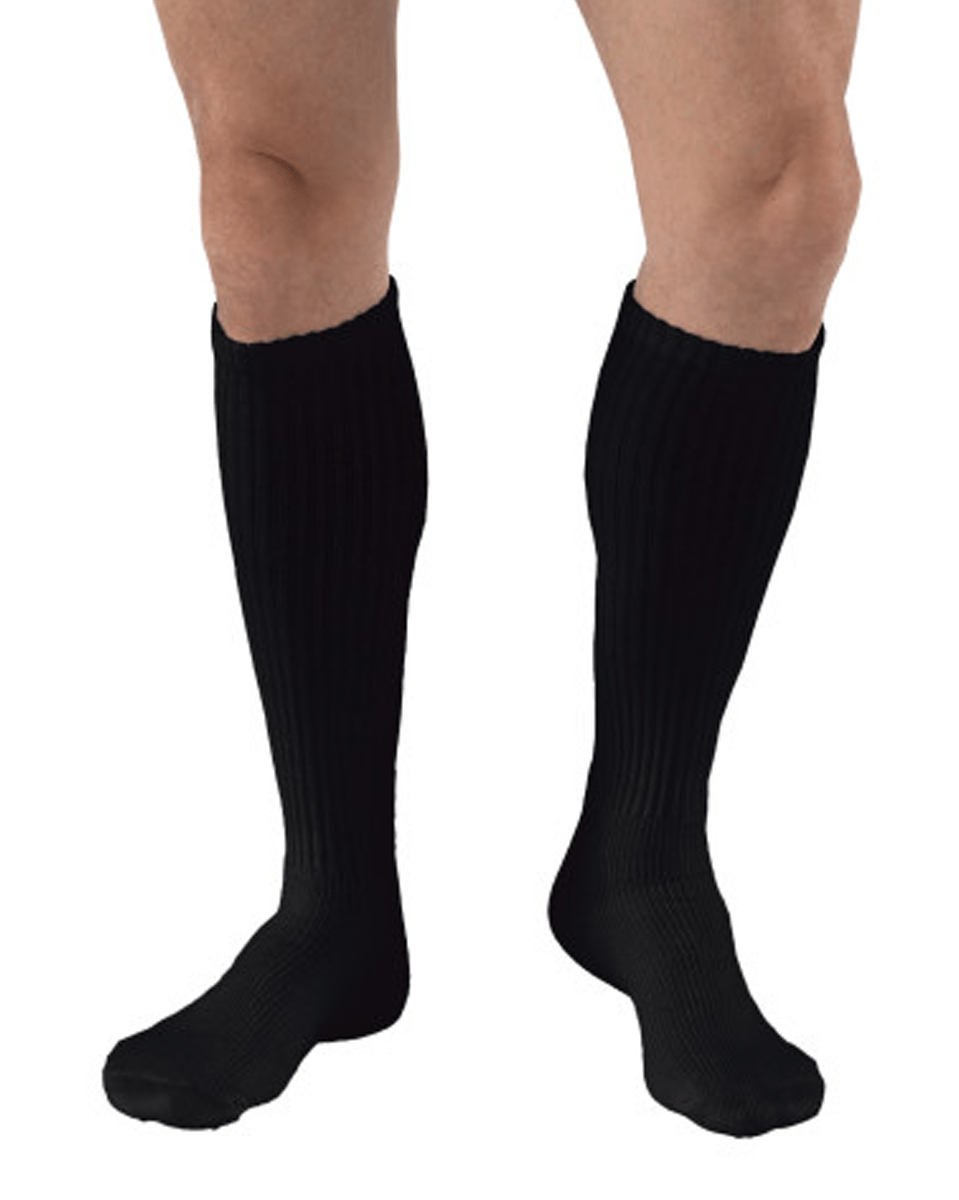
15-20 vs 20-30 mmHg Compression: Which Level Do You Need?
This is the most-asked question in compression — and the answer is simpler than most guides make it sound.
15-20 mmHg is the everyday level — travel, standing jobs, mild swelling, pregnancy, first-time wearers. 20-30 mmHg is the therapeutic level most often recommended by providers for varicose veins, noticeable swelling, and post-procedure wear.
15-20 mmHg
Moderate / everyday
20-30 mmHg
Firm / therapeutic
At a Glance
| 15-20 mmHg | 20-30 mmHg | |
|---|---|---|
| Feel on the leg | Snug, supportive hold | A firm, noticeable squeeze |
| Typical uses | Travel, work, pregnancy, tired legs | Varicose veins, edema, post-surgery, POTS |
| Prescription | No — sold over the counter | Commonly provider-recommended, but still available over the counter |
| Ease of donning | Easy for most wearers | Takes technique — donning aids help |
| First-timer friendly | Yes | Usually worn by provider recommendation |
| Price range | Similar | Similar — the level does not drive the price |
Choose 15-20 mmHg if
- You are flying, driving long distances, or on your feet all day
- You have mild end-of-day swelling or tired, achy legs
- You want comfortable support during pregnancy
- This is your first pair and no provider has given you a number
Choose 20-30 mmHg if
- Your healthcare provider recommended this level
- You have varicose veins or noticeable swelling
- You are wearing compression after a procedure, per provider instructions
- Symptoms persist through the day in 15-20 mmHg
When to step up from 15-20 to 20-30
Three signals suggest it may be time to move up a level: symptoms that persist through the day even while wearing 15-20 mmHg, a recommendation from your healthcare provider, or measurable swelling rather than just tired legs. If any of these apply, 20-30 mmHg is worth discussing at your next appointment.
When NOT to guess higher
More is not better. A firmer level only helps if you actually wear it, and comfort is what drives daily compliance — unworn socks help nobody. If a firm squeeze means the socks stay in the drawer, a comfortable 15-20 mmHg pair you wear every day will serve you far better than a 20-30 mmHg pair you avoid.
The rule of thumb
Frequently Asked Questions
Is 20-30 mmHg too much for daily wear?
Not necessarily. Many people wear 20-30 mmHg every day, most often because a provider recommended it. It delivers a firmer squeeze and takes more effort to put on, so if you have no diagnosis and simply want everyday support, 15-20 mmHg is usually the more comfortable starting point.
Can I wear 15-20 mmHg if my doctor said 20-30?
No — match the level your provider recommended exactly. The number is part of the therapy, and stepping down to 15-20 mmHg means the garment is not delivering the pressure your provider intended. If 20-30 mmHg feels unmanageable, ask your provider about fit, styles, or donning aids before changing levels.
Is there a big comfort difference between the two?
You will feel the difference. 15-20 mmHg feels like a snug, supportive hold, while 20-30 mmHg feels like a firm squeeze, especially at the ankle, and takes more technique to put on. Most first-time wearers find 15-20 mmHg easy to adjust to.
Do both levels come in the same styles?
Largely, yes. Knee-high, thigh-high, pantyhose, open-toe, and sheer options exist at both levels from the major brands, though 15-20 mmHg lines tend to offer a few more casual and fashion styles.
What about 30-40 mmHg?
30-40 mmHg is a medical-grade level typically used under provider supervision for conditions such as lymphedema, severe edema, or recovery after certain procedures. It is not a level to self-select — if you think you need it, talk with your healthcare provider first.
Both levels ship fast with our Low Price Guarantee and 100-day exchange.
Shop 15-20 mmHgShop 20-30 mmHgSize up with the measuring guide or compare all compression levels.