


Find the ideal compression wear for your needs!
Choose Your Gender
Select Compression Level
Pick Your Style
Choose Toe Type


Clearance
-

 28% off
 -

 15% offEssity
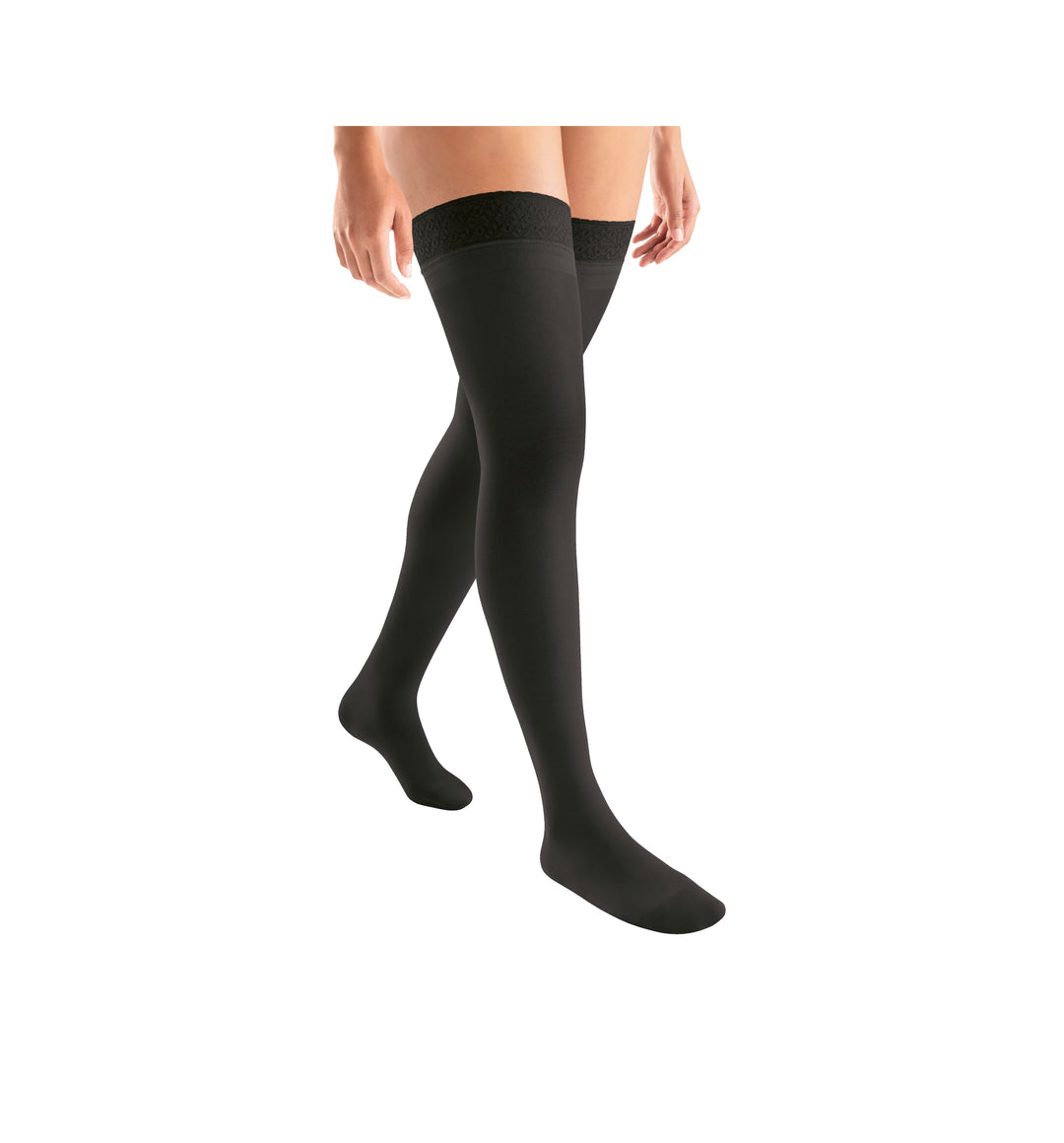
Bas de cuisse Activa Sheer Therapy pour femmes 15-20 mmHg avec haut en dentelle de silicone - LIQUIDATION
$44.00 $52.00$44.00$44.00 $52.00 -

 20% off
 -


 28% off


Best Sellers
-


 20% off
 -

 20% offEssity
Mi-bas de contention Jobst à bout fermé unisexe 20-30 mmHg
$46.40 $58.00$46.40$46.40 $58.00 -


 36% off
 -


 15% offEssity
Chaussettes unisexes hautes pour diabétiques Jobst SensiFoot 8-15 mmHg à maintien doux
$16.85 $20.00$16.85$16.85 $20.00


Women's
-
20% off
-
36% off
-
15% offEssity
Chaussettes unisexes hautes pour diabétiques Jobst SensiFoot 8-15 mmHg à maintien doux
$16.85 $20.00$16.85$16.85 $20.00 -

 20% offEssity
Mi-bas de contention Jobst à bout fermé unisexe 15-20 mmHg
$38.40 $48.00$38.40$38.40 $48.00


Men's
-
15% offEssity
Chaussettes unisexes hautes pour diabétiques Jobst SensiFoot 8-15 mmHg à maintien doux
$16.85 $20.00$16.85$16.85 $20.00 -
20% offEssity
Mi-bas de contention Jobst à bout fermé unisexe 15-20 mmHg
$38.40 $48.00$38.40$38.40 $48.00 -

 20% off
 -
 20% off


Unisex
-
20% offEssity
Mi-bas de contention Jobst à bout fermé unisexe 20-30 mmHg
$46.40 $58.00$46.40$46.40 $58.00 -
15% offEssity
Chaussettes unisexes hautes pour diabétiques Jobst SensiFoot 8-15 mmHg à maintien doux
$16.85 $20.00$16.85$16.85 $20.00 -

 20% off
 -
20% offEssity
Mi-bas de contention Jobst à bout fermé unisexe 15-20 mmHg
$38.40 $48.00$38.40$38.40 $48.00


Second Skin
-


 80% offSecond Skin
Bas de contention transparents pour femmes de 15 à 20 mmHg jusqu'au genou SECOND SKIN
De $19.35 $40.38$19.35$19.35 $100.02 -


 80% offSecond Skin
Bas de contention transparents à bout ouvert pour femmes de 15 à 20 mmHg de SECOND SKIN
De $19.77 $41.26$19.77$19.77 $100.02 -


 79% offSecond Skin
Collants transparents pour femmes SECOND SKIN 15-20 mmHg
$28.72 $138.52$28.72$28.72 $138.52 -


 76% offSecond Skin
Bas de contention transparents pour femmes de 8 à 15 mmHg jusqu'au genou SECOND SKIN
$16.04 $67.76$16.04$16.04 $67.76


Accessories
-
 34% off
 -
 19% off
 -
 22% off
 -
 20% off


Latest Articles
-

Compression Therapy: A Natural Solution for Tired, Achy Legs
No matter if you stand at work or sit behind a desk, your legs...
-

The Role of Compression Garments in Managing Lymphedema
Lymphedema happens when a person’s body collects extra liquid that leads to swelling and...
-

Compression Wear for Recovery: HSA/FSA Coverage Explained
Introduction
FSA-eligible compression socks for recovery; does that work?
Recently,...


Frequently Asked Questions
How do I choose the right compression level?
It’s best to begin with your doctor’s recommendation, especially if you’re managing a medical condition. In general, light support (8–15 mmHg) is helpful for travel, tired legs, or mild swelling, while moderate to firm levels (15–30 mmHg) are commonly used for circulation issues, varicose veins, or recovery. Extra-firm options (30–40 mmHg) are typically prescribed for more serious venous conditions.
What’s the difference between compression socks and stockings?
Compression socks usually cover the foot and extend to the calf, making them ideal for everyday wear, travel, or athletic use. Stockings, on the other hand, can extend to the thigh or waist to provide additional support, which may be needed for conditions that affect circulation higher in the leg.
How long do compression stockings last?
With daily use, most compression stockings last about 4–6 months before losing their elasticity. To extend their lifespan, wash them gently after each wear, avoid heat when drying, and consider having multiple pairs to rotate.
How long can I wear compression socks each day?
This reassures first-time buyers. General advice:
- Wear during the day
- Take off at night unless prescribed
- Always follow your doctor’s instructions
What’s the difference between open toe and closed toe styles?
Open toe stockings leave the toes exposed, which can provide more comfort in warm weather, accommodate wider shoe sizes, or allow for easier foot checks in medical settings. Closed toe stockings look more like regular socks or hosiery, and are often preferred for daily or professional wear.
How do I size my compression stockings?
Accurate measurements are the key to getting the right fit. Use a soft tape measure to record the circumference of your ankle, calf, and (for thigh-high or waist styles) your thigh, along with leg length. Our detailed sizing guide will help match your measurements to the correct size.
Are your products covered by insurance?
Some medical compression wear may qualify for reimbursement through insurance plans, especially when prescribed by a doctor. Coverage varies by provider, so check with your insurance company for details and keep your order receipt for documentation.
How should I wash and care for my compression wear?
In general, hand wash your compression wear or use a delicate machine cycle with mild detergent, then air dry away from direct heat. Avoid bleach, fabric softener, or wringing your compression garments out, as these can damage the fibers. Proper care keeps compression garments effective for longer. Always check the labels on your specific compression products.
When should I replace my compression stockings?
Replace your stockings every 4–6 months, or sooner if you notice sagging, stretching, or difficulty maintaining compression. A snug, supportive fit is essential for your garments to work properly.
Can I return or exchange my order if it doesn’t fit?
Yes! We offer a 100-day exchange window, so you can shop worry-free.
Do compression socks really work?
Yes. Compression wear is clinically proven to improve circulation, reduce swelling, and relieve leg fatigue. That’s why doctors recommend it for travel, sports, pregnancy, and medical conditions.
